Monday, November 19, 2012
The Hart of New York City: The Poor and The Potter's Field
In The New Colossus Emma Lazarus gives voice to the “The Mother of Exiles,” when Lady Liberty cries, "Give me your tired, your poor, Your huddled masses yearning to breathe free, The wretched refuse of your teeming shore. Send these, the homeless, tempest-tost to me.” Standing upon her tiny island in the New York Harbor, The Statue of Liberty was meant to serve as a symbol of freedom, democracy, and opportunity for those migrating to American shores. What happened to those poor huddled masses after they landed is an entirely different story, one that has remained conspicuously inconspicuous for over a century. Located opposite of Liberty Island in Long Island Sound just northeast of Manhattan resides another highly symbolic little island, the world’s largest publicly funded cemetery and potter’s field. Approximately 850,000 bodies have been interred on Hart Island, and every year tens of thousands of adults and children wind up in pine boxes stacked one on top of the other in mass graves. Hart Island is where the homeless, the poor, the unidentified, and the unclaimed go when they die. For many the only identification or marker of their life and death is a string of numbers written on the side of their simple coffin in black marker. Serving as the city’s largest potter’s field since 1869, throughout the years many of the graves have become lost along with the hundreds of bodies they contain.
As space is socially produced, coded and materially constructed, upon examination it is clear that Hart Island is a place for everything and everyone that the city deems deviant or undesirable. Throughout history this island has been used as a place of exile. A women’s asylum, a confederate and WWII POW camp, a drug rehabilitation facility, a prison, a quarantine facility, and a NIKE missile base have all been located on Hart Island (http://kingstonlounge.blogspot.com/2008/08/hart-island.html). Even stranger, the island is under the control of the Department of Corrections (DOC), which pays inmates from Riker’s Island Prison to lay the dead to rest (http://www.correctionhistory.org/html/chronicl/nycdoc/html/hart.html). There have been few visitors to the island, and even families attempting to find lost loved ones are met with a nightmare of bureaucratic red tape due to it being under DOC jurisdiction. The state maintains a barrier both physical and social between those laying in the potter’s field and the public. While many New Yorkers may know that the poor end up in a potter’s field, the ritual of burying the dead remains shrouded in mystery. What does this landscape say about our society?
Adults are buried in three rows of 150 people and the children are buried in three rows of a thousand. The poor lay alongside unidentified and unclaimed persons, and sometimes they are unidentified because they are poor. Currently, excavations are being conducted to locate unmarked graves, and with the use of DNA, forensic archaeologists are starting to make positive identifications and repatriate some of the remains. Non-profits are also working to obtain the burial records from the DOC and digitize them so the public can search for lost loved ones whom might be buried amongst the masses (http://hartisland.net). While this helps identify those with families searching for them, it does not help those who were forced into the graves due to economic conditions, nor will it help those who died without comparative DNA samples in the database.
Identifying Remains in New York's Potter's Field by associatedpress
All across the world, in every culture the deceased’s body is highly symbolic in rituals surrounding death. Even in death it is assumed that an individual or related group should have some agency over the body. For example, in the United States, even those that donate their body to science or choose to forgo a burial must go through a process whereby consent is obtained from a will or family member. However, an interesting connection between death, the state, and capitalism exists; if someone dies without having money for a burial the state then rules over the body, but federal law stipulates that one cannot sell their body for money upon death. So while the human body may become the property of the state due to economic status, the state also restricts commodification of the corpse. Those that live in poverty are not extended the same rights or abilities as those that can afford hundreds if not thousands of dollars for a burial or cremation. Instead they go through a ritualization that de-signifies the individual and de-sanctifies the human body, creating an unknown homogeneous unit. While Lady Liberty stands on her island welcoming the poor and wretched to New York City’s shore, another tiny island hidden away from society awaits to lay them to rest en mass.

Monday, November 12, 2012
Chechnya's Mass Graves left Untouched


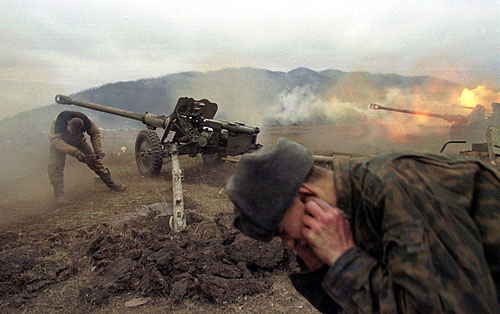
In 1998, the Rome Statute of the International Criminal
Court was drafted and signed signaling the establishment of the International
Criminal Court. The court was
established with the goal of investigating and prosecuting crimes including war
crimes, genocide, and crimes against humanity.
Article 6 of the Rome Statute cites the “enforced disappearance of
persons” as a war crime. The definition
of such “disappearance” includes, but is not limited to, the murder of persons
and the burial of such persons in mass, unmarked graves.
Archeology holds the unique ability
to exhume and identify both the cause of death and the identity of bodies. Archeological methods can therefore be used
highlight the mass human rights violations that have been committed against the
disappeared and their families. In the
case of the Chechen wars, archeologists have been unable to highlight
violations due to Russia’s unwillingness to exhume the mass graves believed by
many who have lost relatives, to be the key to learning what happened to their
loved ones who disappeared during the wars.
Russia reports that 574 cases of missing persons have been resolved yet 57
known mass graves remain untouched. The few investigations that have been carried out, have been either botched or executed in an unprofessional manner.
Numerous human rights organizations
including Amnesty International and Human Rights Watch have condemned Russia’s
unwillingness to work to exhume and identify the bodies in an appropriate manner. Inappropriate practices include failure of collecting evidence from bodies (both forensic and material), failure to publicize their findings to relatives, and failure to carry out investigations into the nature of deaths (such as interviewing known witnesses). Such botched investigations have made it difficult to determine what has happened to the bodies found. Since 2005, the European Court
of Human Rights has handed down over 170 judgments finding Russia “responsible
for serious human rights abuses in Chechnya, including executions, torture, and
enforced disappearances” (HRW 5). But despite
these judgments, there have been no official tribunals or legal proceedings on
war crimes; Russia has done very little to help victims of the war recover and find
their missing relatives, many of whom could certainty be identified by way of proper practices.
By not exhuming these mass graves or doing so in an improper manner, Russia is
further violating the rights of the Chechen war victims. Surviving relatives are left to imagine the
horrors their loved ones endured while not knowing what became of them. Russia has clearly taken the approach of
ignoring its past violations and failing to address the cloud of uncertainty
that looms over many survivors whose relatives disappeared. Russia should be well aware, however, that
ignoring a problem does not make is disappear.
Russia’s handling of the mass graves brings up many questions. How does the refusal to exhume mass graves
and subsequently work to identify the bodies further violate the rights of both
the deceased and their surviving relatives? Why has the international community sat by while human rights abuses continue?
Sources:
Kramer, Andrew.
"A vexing reminder of war in Chechnya's booming capital." New York
Times 29 04 2008, Web. 10 Nov. 2012. <http://www.nytimes.com/2008/04/29/world/europe/29ihtjournal.4.12440042.html?pagewanted=all&_r=0>.
“Making Justice Count in Chechnya.” Human Rights Watch (2011): 1-21. Human Rights Watch. Web. 9 Nov. 2012
UN General Assembly,
Rome Statute of the International Criminal Court (last amended 2010), 17
July 1998, ISBN No. 92-9227-227-6, available at:
http://www.unhcr.org/refworld/docid/3ae6b3a84.html [accessed 9 November
2012]
Subscribe to:
Posts (Atom)