Monday, November 12, 2012

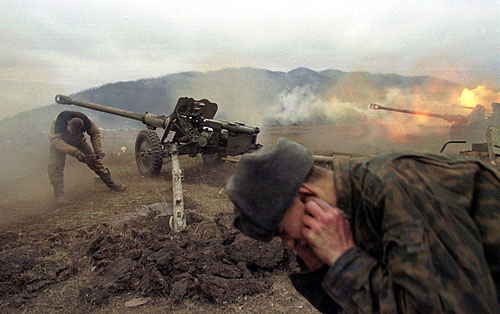
Chechnya's Mass Graves left Untouched


Second Chechen War: Source
Map of Chechnya: WHO
In 1998, the Rome Statute of the International Criminal Court was drafted and signed signaling the establishment of the International Criminal Court.  The court was established with the goal of investigating and prosecuting crimes including war crimes, genocide, and crimes against humanity.  Article 6 of the Rome Statute cites the “enforced disappearance of persons” as a war crime.  The definition of such “disappearance” includes, but is not limited to, the murder of persons and the burial of such persons in mass, unmarked graves. 

Archeology holds the unique ability to exhume and identify both the cause of death and the identity of bodies.  Archeological methods can therefore be used highlight the mass human rights violations that have been committed against the disappeared and their families.  In the case of the Chechen wars, archeologists have been unable to highlight violations due to Russia’s unwillingness to exhume the mass graves believed by many who have lost relatives, to be the key to learning what happened to their loved ones who disappeared during the wars.  Russia reports that 574 cases of missing persons have been resolved yet 57 known mass graves remain untouched.  The few investigations that have been carried out, have been either botched or executed in an unprofessional manner.

Numerous human rights organizations including Amnesty International and Human Rights Watch have condemned Russia’s unwillingness to work to exhume and identify the bodies in an appropriate manner.  Inappropriate practices include failure of collecting evidence from bodies (both forensic and material), failure to publicize their findings to relatives, and failure to carry out investigations into the nature of deaths (such as interviewing known witnesses).  Such botched investigations have made it difficult to determine what has happened to the bodies found.  Since 2005, the European Court of Human Rights has handed down over 170 judgments finding Russia “responsible for serious human rights abuses in Chechnya, including executions, torture, and enforced disappearances” (HRW 5).  But despite these judgments, there have been no official tribunals or legal proceedings on war crimes; Russia has done very little to help victims of the war recover and find their missing relatives, many of whom could certainty be identified by way of proper practices. 

By not exhuming these mass graves or doing so in an improper manner, Russia is further violating the rights of the Chechen war victims.  Surviving relatives are left to imagine the horrors their loved ones endured while not knowing what became of them.   Russia has clearly taken the approach of ignoring its past violations and failing to address the cloud of uncertainty that looms over many survivors whose relatives disappeared.  Russia should be well aware, however, that ignoring a problem does not make is disappear.  Russia’s handling of the mass graves brings up many questions.  How does the refusal to exhume mass graves and subsequently work to identify the bodies further violate the rights of both the deceased and their surviving relatives?  Why has the international community sat by while human rights abuses continue? 

Sources:

Kramer, Andrew. "A vexing reminder of war in Chechnya's booming capital." New York Times 29 04 2008, Web. 10 Nov. 2012. <http://www.nytimes.com/2008/04/29/world/europe/29ihtjournal.4.12440042.html?pagewanted=all&_r=0>.

“Making Justice Count in Chechnya.” Human Rights Watch (2011): 1-21. Human Rights Watch. Web. 9 Nov. 2012

UN General Assembly, Rome Statute of the International Criminal Court (last amended 2010), 17 July 1998, ISBN No. 92-9227-227-6, available at: http://www.unhcr.org/refworld/docid/3ae6b3a84.html [accessed 9 November 2012]


Thursday, November 8, 2012

Part Two: Ruined

My powerful childhood experiences left a strong flavor in my memory like Proust’s “petites madeleines.” Consequently, throughout my life I have been drawn towards ruined spaces whether it was the wasteland of mills in Hazelwood or a neglected east side Canal Street platform. Over the years, my juvenescent fascination has developed into a desire to re-evaluate the nature of derelict spaces.

What are we to make of these withered stumps of time that have become a part of the city’s existing condition? I hope to pursue an understanding of urban decay by conducting research that will present us with an opportunity to know what these spaces have become, and what potential they hold.

Sadly, as it currently stands our ability to decide how we should judge the potential that voids and wastelands hold is deeply impaired. The reason being that the unclaimed buildings and the un-authorized activities that occur in them are generally divided by society into opposing binaries. Most often it is a positive or negative lens that is used. One side equates urban decay with dereliction, social decline and waste. The other side represents ruined sights as places of inspiration, a repository of memory, generators of creativity, places of habitation and performance. It is a limiting viewpoint that blocks the way to inquiry (i.e. to understanding these buildings or studying their current and potential use), and in turn prohibits growth (i.e. the possibilities that these structures contain good or bad)—one that should be challenged.

My time at the Rock has shown me that the rusting mills and deserted sooty brick houses have great potential—one that cannot be simply seen as good (the buildings are a beacon for creative spirits) or bad (the buildings are decrepit and dangerous). Put another way, the possibilities that exist within these structures cannot be divided into two groups that are separated by an immaculate border. Instead, the two categories should be seen as distinct but connected—an ambiguous tension in an ever-shifting realm.

What type of study will present us with an opportunity to know what these spaces have become and what potential they hold? I believe if we are to see the space as it is, with its complex layers of interaction between the built environments, the derelict and the wild then it is crucial to start from where we are. One-way to address the question is by determining what kind of activity the space invites. Ergo, my next step is to attempt to discern what types of activities the bottom of the rock solicits.


Why Ruins: A Personal Reflection on the Black and Yellow Steel City


My interest in urban decay stems from long-term exposure to postindustrial ruins. As a child the abandoned mills of Iron City and the disintegrating Erie Railroad repair shops exerted a magnetic attraction for me. I spray-painted on the worn-down brick walls of the boarded-up mills, which lined the Ohio River. Games of hide-and-seek were not played in a family sanctioned park, but were passionately played in a half-forgotten sight that once housed the mighty Chartiers Creek Railroad. In the not so distant past our shrieks and the pounding of our feet against the pavement echoed through the empty shop floors as we played cops and robbers.

Due to the unorthodox habitat of my upbringing I was exposed at an early age to people of whom society generally paints an unflattering picture as well as to a landscape that the public mostly views as a social blight. Drug dealers, tattoo artists, inhabitants of the “Bottom” Projects, steel mill workers, and members of motorcycle gangs were all daily actors in childhood life. For example, my babysitters did not use umbrellas to fly through the sky or speak with British accents; instead, they used Harley-Davidson motorcycles embellished with pinup girls and spoke with true Pittsburghese accents. 

In regards to the landscape, the area in which I played was only a shadow of its former self. Once upon a time, the neighborhood was flourishing with wealth, amenities, and expansive shopping districts—but no longer. Today the streets and avenues that once contained restaurants and libraries now contains bars, illegal strip clubs, and underground gambling. The factories and workshops that once shook with the roar of machines and the yells of workers now stand empty next to the smokeless smokestacks. A semi-ghost town might seem like an unfortunate playground—a social blight that can only foster delinquent activity. But, it was the abandoned buildings of the post-industrial revolution, which served as a backdrop for all of my passions and hobbies.

The rock’s inhabitants and abandoned structures broadened my horizons in more ways then I can ever thank them for. I learned of new music, books, comics and artists that I would have never encountered otherwise. I was taught to appreciate graphic novels, street artists, and music ranging from rappers like Formula412 to rock groups like the Buzz Poets. More importantly, I was taken to places, engaged with people, and participated in activities—like skateboarding at Mr. Smalls, raving at the Cork factory, or learning to cook a boiled pierogi with the women of the Holy Trinity Polish Church—that I would have been scared of or not interested in otherwise approaching.

Ultimately, these experiences and interactions not only molded my outlook and hobbies, but they also cultivated an interest that has come to define the course of my life: studying post-industrial unintentional urban voids with the hopes of someday better grasping how “empty” unclaimed spaces are used/understood. 

Further Reading:
  • Rose Macaulay, Pleasure of Ruins (New York: Thames and Hudson, 1953). 
  • Julia Hell and Andreas Schonle, eds., Ruins of Modernity (United States, Duke University Press, 2010).  
  • Georg Simmel, "Two Essays: the Handle and the Ruin", Hudson Review, 11:3 (1958: Autumn) 370-384.
  • Robert Ginsberg, "Aesthetics of Ruins," Bucknell Review 18:3 (1970: Winter) 89-103.
 Websites:

Wednesday, November 7, 2012

Forced Disappearances and the Application of Forensic Anthropology


The phrase Damnatio Memoriae is a Latin term describing the Roman practice of erasing an individual from history. Normally this treatment was reserved for Emperors or society elites that brought disdain upon the Roman community. Their names were erased from public records, statues and physical representations were deformed, and their personal property was redistributed to local polities. Even coins were re-minted to remove the name and images of these despised people.  Often it was forbidden to speak of those individuals, ensuring all traces of them where forgotten.

Image of the desaparecidos from the Mothers of the Plaza del Mayo
This ancient capability to erase an individual’s existence occurs today with an act known as forced disappearances. These disappearances, which happen during times of civil conflict,  result in an individual being secretly abducted by a government regime, which then denies the existence of the individual. More often than not, the individual is killed and the body is disposed of, as if the individual had vanished. Since the offending party asserts no knowledge of the person in question, the inquiring family is stifled into silence, threatened from making any further claims


Map of South America
 Operation Condor was a movement of political repression that stretched across a majority of South America during the mid-seventies.  The goal, set in place by the right-wing dictatorships, was to eradicate individuals who held communist and socialist ideals, and to control counter-government movements. Under this plan, administrations could persecute individuals who had fled from their homes into neighboring countries. The countries which participated in this movement are shown on the left in dark green, while the light green countries were only sporadic participants. All together, over 60,000 disappearances can be attributed to this operation.


Although many individuals disappeared without a trace, some were buried in mass graves located all over South America. The application of forensic techniques in identifying bodies interred in mass graves can be used for judicial purposes, to document human rights abuses and provide evidence for tribunals, as well as for humanitarian purposes, in assisting families with recovering their loved ones. The excavation of these mass graves can also contribute to the historical reconstruction of the past, as it is not uncommon for a national amnesia to be imposed, hiding unwarranted civilian deaths. It creates a voice for individuals who had been silenced, allowing them to share their stories and move past their fears. 


Further Reading:
Amnesty International Enforced Disappearances 
Operation Condor
EAAF Mission Statement